
Hidden disabilities at SEA: what the airport offers and how to get it
SEA hands out free Sunflower lanyards at three desks, keeps two sensory rooms open from 4 a.m. to midnight, and links to TSA Cares. Where each is and how to ask.
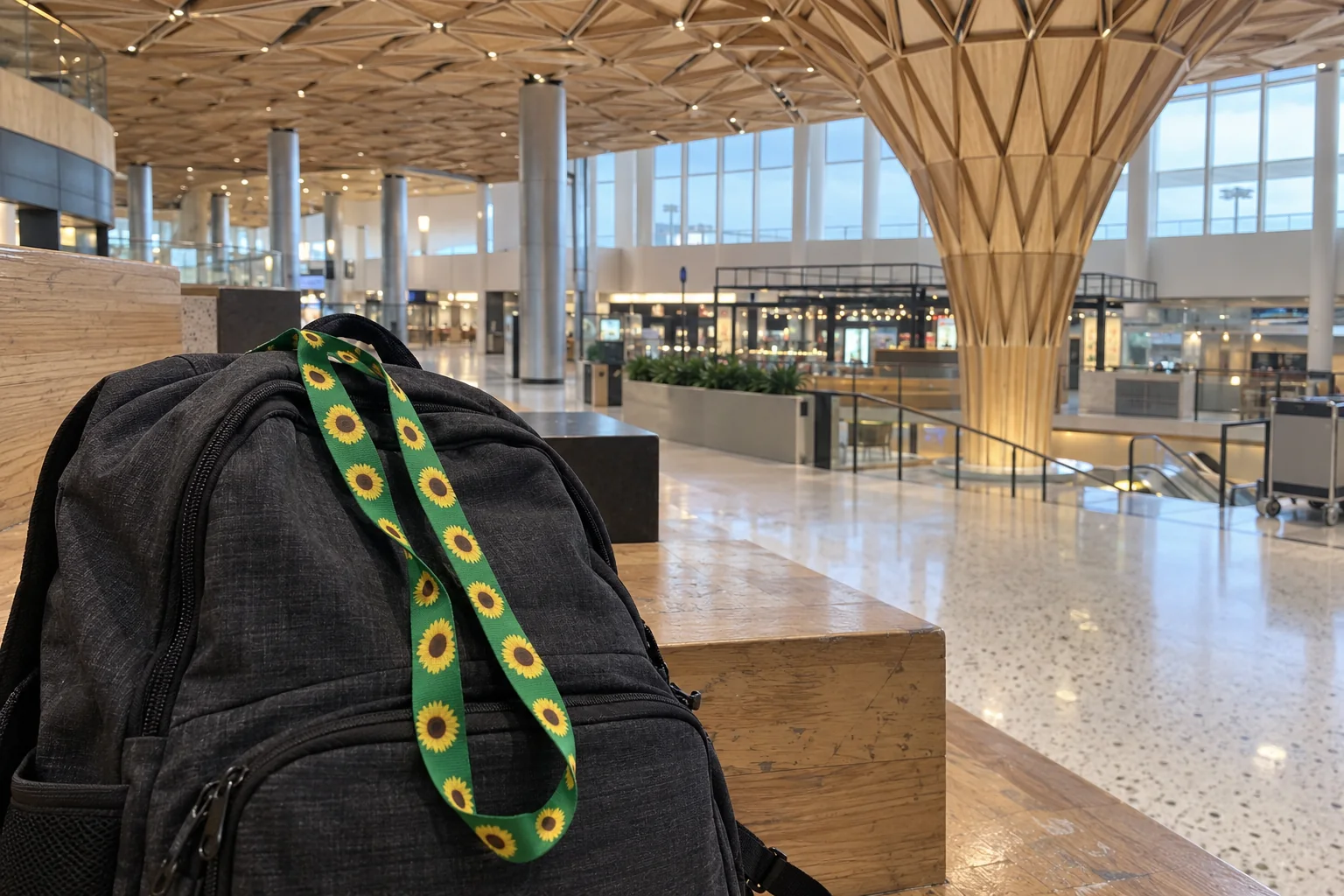
After security, SEA has two sensory rooms open daily from 4 a.m. to midnight. For the door code, call the Port of Seattle’s sensory-room access number, (206) 787-5229, and press 1. SEA also has Interfaith Prayer and Meditation Rooms, including one before security. If you need staff to recognize that you may need more time or help, ask for a free Sunflower lanyard at an information desk. The lanyard is optional. It does not arrange assistance with screening or your flight.
If you’re already overwhelmed, head for the nearer room: the hallway by the elevators at SEA Underground A Station, or Level 3 above Gate C3 near the Lookout. Each is a shared space with limited capacity.
Plan the parts that need another person
For help with a seat, boarding, a wheelchair or support after security, contact your airline before travel. SEA also has a Social Story and Resource Guide to review before the trip. The 52-page guide uses photos and sensory and environment icons to show what to expect. It was made for travelers with autism to review with family or caregivers, but anyone can use it.
For screening support, ask TSA Cares for a Passenger Support Specialist at least 72 hours before departure. You can use its form or call (855) 787-2227. Phone hours are weekdays 8 a.m. to 11 p.m. ET, and weekends and holidays 9 a.m. to 8 p.m. ET. The specialist can help you through screening, but you still go through screening and the service does not speed up the line. If you’re already at the checkpoint, ask a TSA officer for a specialist. You can also show a TSA notification card or medical documentation to explain what you need.
For accompanied help from the curb, SEA lists CLEAR Concierge starting at $99. It includes a curbside greeting, bag help, and an escort through the CLEAR+ lane at the TSA checkpoint to your gate.
Arriving by Link, rental car shuttle or the garage and need a wheelchair to check-in? Call Prospect Airport Services at (206) 246-1550 when you arrive. On the rental car shuttle, tell the driver you need a wheelchair. The driver contacts Prospect so an assistant meets you at the drop-off area. Prospect takes you to the airline ticket counter for free and appreciates tips. Your airline handles the wheelchair journey from its ticket counter onward.
Pick up a lanyard before the checkpoint, or after it
SEA gives out Sunflower lanyards for non-visible disabilities, including autism, PTSD and hearing loss.
Before security, ask at the ticketing-level information desk between Checkpoints 4 and 5. There’s another desk on the baggage claim level in the Gina Marie Lindsey Arrivals Hall, near Checkpoint 1. After security, try the A Concourse desk near Gate A5. The three desks are generally staffed daily from 7 a.m. to 9 p.m. If a desk has no staff, ask Premium lane staff at Checkpoint 3 or 4 for a lanyard. Checkpoint 3 is listed as open 4 a.m. to 11:30 p.m. Checkpoint 4 is open 24 hours.
A lanyard does not tell staff which help you need. At an information desk, Pathfinders can arrange Language Line interpreting, including on-demand American Sign Language. They also have visual and auditory assistance tools, including Braille. If you cannot find a Pathfinder, call SEA Customer Care at (206) 787-5388, daily from 8 a.m. to 5 p.m. Pacific time.
Take a break after security
Both sensory rooms have bench seating, interactive chairs, dimmable lighting, acoustic panels and places for shoes and bags. The A Station room also has a starlit sky, seating nook, rocking chair and large sitting pillows. Security cameras monitor them, and children need an adult with them. Call for the code before walking over, especially if waiting outside a locked door would be difficult.
From an A, B, C or D gate, you can walk between concourses after security. At an A gate, take the elevator across from Starbucks near Gate A3 down to the Train level, then follow the hallway toward the train platform for the A Station room. From the S Concourse, take the SEA Underground Blue Line to A Station for the hallway room. From the N Concourse, the Green Line reaches C Station for the room above Gate C3.
If a sensory room is full, the Jabbrrbox booths near Gates A5 and A8 offer another place to sit after security. Each booth fits one person. Book at the unit in 15-minute blocks, for up to two hours at a time. The booths are not wheelchair accessible. Check the price at the booth. If you’d rather meet a dog than enter a room, look for SEA Pups therapy dog teams and their volunteer handlers in the airport. You can also ask an information desk or a Pathfinder in green for help finding a calmer place. To report a problem inside a sensory room, call ACC at (206) 787-7233.
If you need an accessible alternative to the booths, the Port points to day passes for The Club at SEA in A Concourse and The Club at SEA in S Concourse. Both are after security. The A lounge is across from Gate A11, open daily from 5 a.m. to 12:30 a.m., with a $50 day pass. The S lounge is above Gate S10. Take the elevator beside Gate S9 up one floor. It is open daily from 6 a.m. to 1:30 a.m., with a $60 day pass. Both admit day-pass holders up to three hours before departure.
The Interfaith Prayer and Meditation Rooms offer another quiet space. After security, find them in the SEA Underground A Station hallway near the elevators and on Level 3 above Gate C3 near the Lookout. The C3 room has a sink and foot-washing station. Before security, there’s a room at Skybridge 2 with no water access. The rooms are open 24 hours on Friday, Saturday and Sunday. On Monday and Wednesday, they’re open from midnight to 11:30 p.m. On Tuesday and Thursday, they’re open from 4 a.m. to midnight. Food, drinks, resting and sleeping are not allowed, so use one for prayer or meditation rather than a nap or meal.
Sources
- Our sensory rooms, prayer and meditation rooms and sleeping and resting pages
- Our wheelchair assistance, information desks, baggage claim and security pages
- Our terminal, parking, Link and rental car shuttle pages
- Our A Concourse and S Concourse Club at SEA pages
- TSA’s passenger support page