
International to domestic connection at Seattle airport
Landing at SEA from abroad and flying on? Collect bags, clear passport control, recheck, then screen again. Allow three hours.
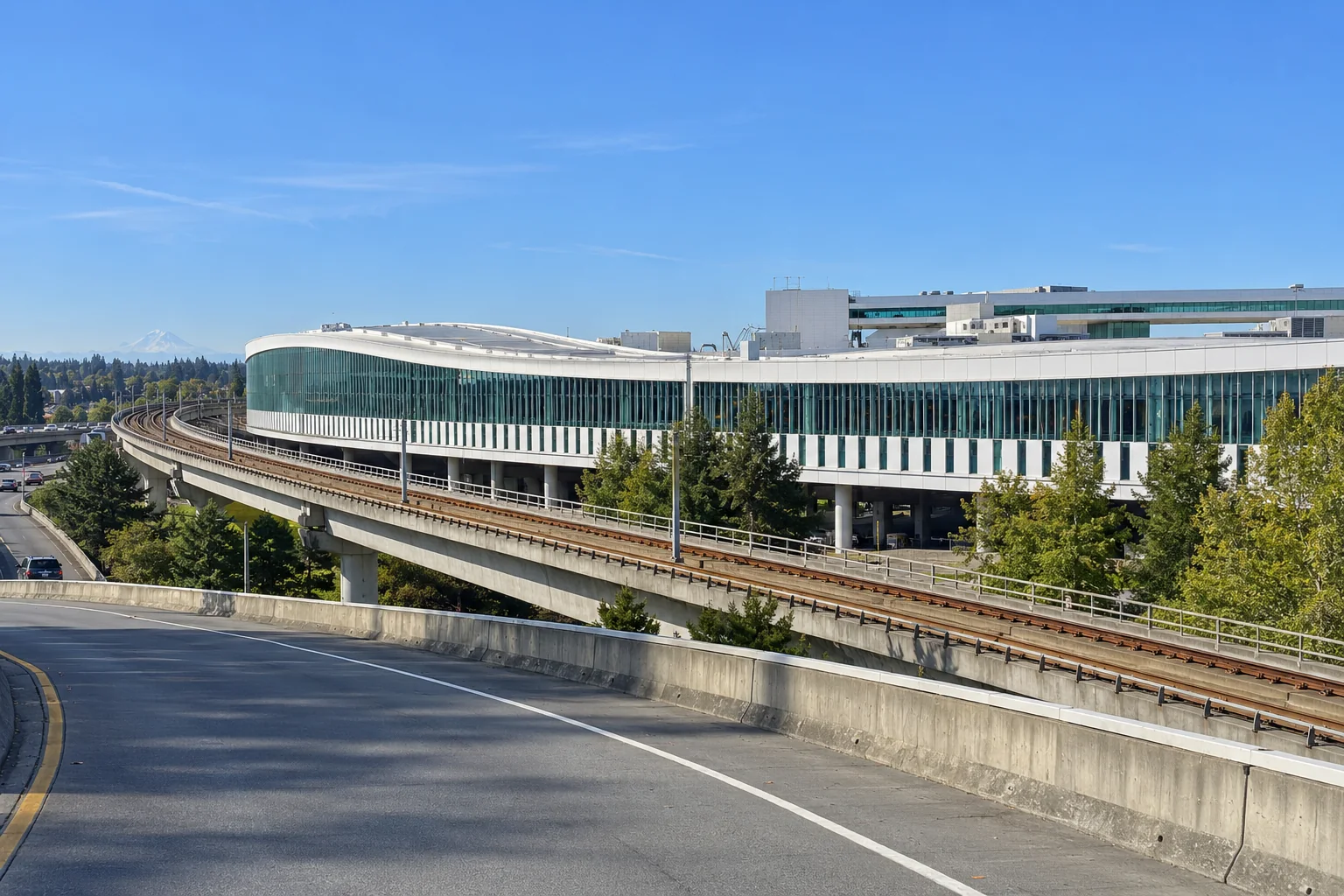
Even if you’re connecting, collect your checked bags before passport control at Seattle-Tacoma International Airport (SEA). After the Customs and Border Protection (CBP) interview, turn right for airline bag recheck. Then clear Transportation Security Administration (TSA) screening and go to your domestic gate. You cannot stay in the secure gate area throughout this connection.
If you haven’t booked yet, allow three hours between flights. That’s the Port of Seattle’s recommendation on its international arrivals page. Its international connections page gives a range of 120 to 180 minutes. If your ticket allows less, ask your airline about changing it before you travel.
First, check where you cleared U.S. passport control
SEA’s international arrivals route applies when your flight first enters the United States here. Flights from a U.S. Preclearance airport complete passport control before departure. The Port lists Dublin, Shannon, Aruba, Bermuda, Abu Dhabi and Nassau as Preclearance airports outside Canada. In Canada, it lists Calgary, Toronto, Edmonton, Halifax, Montreal, Ottawa, Vancouver and Winnipeg. If you arrive from one of these airports, you do not use SEA’s International Arrivals Facility for passport control. Ask your airline whether your checked bag continues to the domestic flight.
For other international arrivals, follow the signs into the International Arrivals Facility.
Collect your bags, then meet CBP
Look for IAF Baggage Claims 18–24, then check the overhead signs for your flight’s assigned carousel. Go down to that claim and take every checked bag with you. Oversize bags have a nearby claim area. SEA provides luggage carts there at no charge. If a bag has not arrived, speak to your airline’s baggage staff.
Refill stations are at passport control, by Claim 23, at bag recheck and on the IAF mezzanine. You can reach them before the onward TSA screening. If you leave the IAF before screening, refill by Checkpoint 6 or on the baggage-claim level. The nursing room is on the IAF mezzanine near the family restrooms, for arriving international passengers. Adult changing tables are downstairs near the baggage claim restrooms.
Take your bags to passport control. Follow the overhead signs for the lane that matches your entry status, such as U.S. citizen, non-U.S. citizen, Mobile Passport Control or Global Entry. The Port lists an accessible lane and interpretation at the booths. If the CBP officer refers you to secondary screening, follow the officer’s directions and head right for further inspection.
Global Entry works at Seattle Airport
The Port says Global Entry is available for all international flights arriving at SEA. The free Mobile Passport Control app is open to U.S. and Canadian citizens. Neither program removes the bag collection or later TSA screening steps.
Customs at SEA takes 60 minutes or more
During peak periods, processing can take 60 minutes or longer. Leave time to collect bags and reach recheck and TSA after CBP. The Port names holidays, summer travel and the daily international arrival wave from 10 a.m. to 3 p.m. Pacific Time.
Turn right for bag recheck
After CBP clears you, follow the connecting flights walkway on the right. The left-hand route exits toward Seattle. On the right, airline counters can help with bag recheck and ticketing before you reach TSA screening.
Check that the airline accepts your bag for the domestic flight. Alaska Airlines and Delta Air Lines have agents who can help with recheck or rebooking, although their counter hours vary with demand. Depending on your airline, you may need to leave the transfer route and recheck before security. Alaska check-in is on the main terminal’s ticketing level (Level 5) near Door 29, with bag drops on Level 4 by Skybridges 5 and 6. Delta check-in is on Level 5, with curbside check-in near Door 17. Ask whether your airline will take the bag at the recheck counter before you leave it. Our airline directory can help you find your departing carrier’s check-in area.
On separate tickets, ask your onward airline where it will accept your bag and what its check-in deadline is.
Clear security again and find your gate
The International Arrivals Facility’s transfer checkpoint is open 6 a.m. to 9:45 p.m. Pacific Time. It has no TSA PreCheck lane. Once you clear it, you enter the A Concourse. A Station is across from Gate A3 for the Blue and Yellow Lines.
If the transfer checkpoint is closed, the Port directs connecting passengers to exit to the pre-security terminal and use a main checkpoint. You may also need a main checkpoint if your airline sends you to ticketing to recheck a bag. Checkpoint 1 is on the baggage-claim level. From the south end of the lower Arrivals drive, enter through Doors 6 or 4 to reach it. It and Checkpoints 2 and 3 are closest to A and S. Checkpoint 4 is closest to the Central Terminal and B and C. Checkpoints 5 and 6 are closest to C, D and N. Checkpoint 4 is open 24 hours and can reach every gate.
For TSA PreCheck, use a main terminal checkpoint. Checkpoint 2 lists PreCheck and is open 4 a.m. to 4 p.m. Checkpoint 3 lists it from 4 a.m. to 8 p.m., with general screening until 11:30 p.m. Checkpoint 5 lists PreCheck and is open 4 a.m. to 8 p.m. Checkpoint 6 lists it from 6 a.m. to 8 p.m. The Port of Seattle’s checkpoint directory also lists PreCheck at Checkpoint 1, which is open 4 a.m. to 8 p.m. Its live wait-times page lists only general and CLEAR+ lanes there. Check our security page for checkpoint locations and published hours before you choose.
A, B, C and D Concourses connect on foot after security. For N, take the Yellow Line from A Station to D Station, then change to the Green Line. For S, take the Blue Line from A or B Station. Blue and Green Line trains arrive every three minutes. These trains stay after security. Use your airline’s live flight details for the gate, then our terminal guide for the route.
If you need directions or accessibility help after the IAF, the information desk in Gina Marie Lindsey Arrivals Hall is on the baggage claim level near Checkpoint 1, before security. After screening, there’s another in A Concourse between Gates A5 and A6. Both are generally staffed daily from 7 a.m. to 9 p.m.
If the connection is going wrong
Your bag is late or missing. Tell your airline’s baggage staff at the IAF and ask what to do about the domestic leg. The Port lists these missing-bag phone lines: Alaska 1-877-815-8253, American 800-433-7300, Delta 800-325-8224, United 1-800-335-2247, Southwest 1-800-435-9792 and Air Canada 1-888-689-2247. After CBP, airline baggage-service offices are on the main terminal’s baggage-claim level, before security: Delta by Claim 6, Air Canada and United by Claim 9, Southwest by Claim 10, Alaska by Claim 14 and American by Claim 16.
You might miss boarding. Contact your onward airline as soon as you know. The Port says each airline sets its own rebooking policy. Use your airline’s app to confirm the departure and gate. Our flights page shows where each airline checks in.
The transfer checkpoint is shut, or you need PreCheck. Exit to the pre-security terminal and use a main checkpoint. For PreCheck, use a main terminal checkpoint after rechecking any bag your airline sends to ticketing.
You need mobility help. Arrange wheelchair assistance with your airline for the connection. The Port says baggage assistance must also be coordinated with the airline. Ask staff in the International Arrivals Facility for the accessible passport-control lane if you need it.