
Flying out of Seattle with a pet
Flying from SEA with a pet: how checkpoint screening works, where the relief areas are (door 33 before security) and what your airline decides.
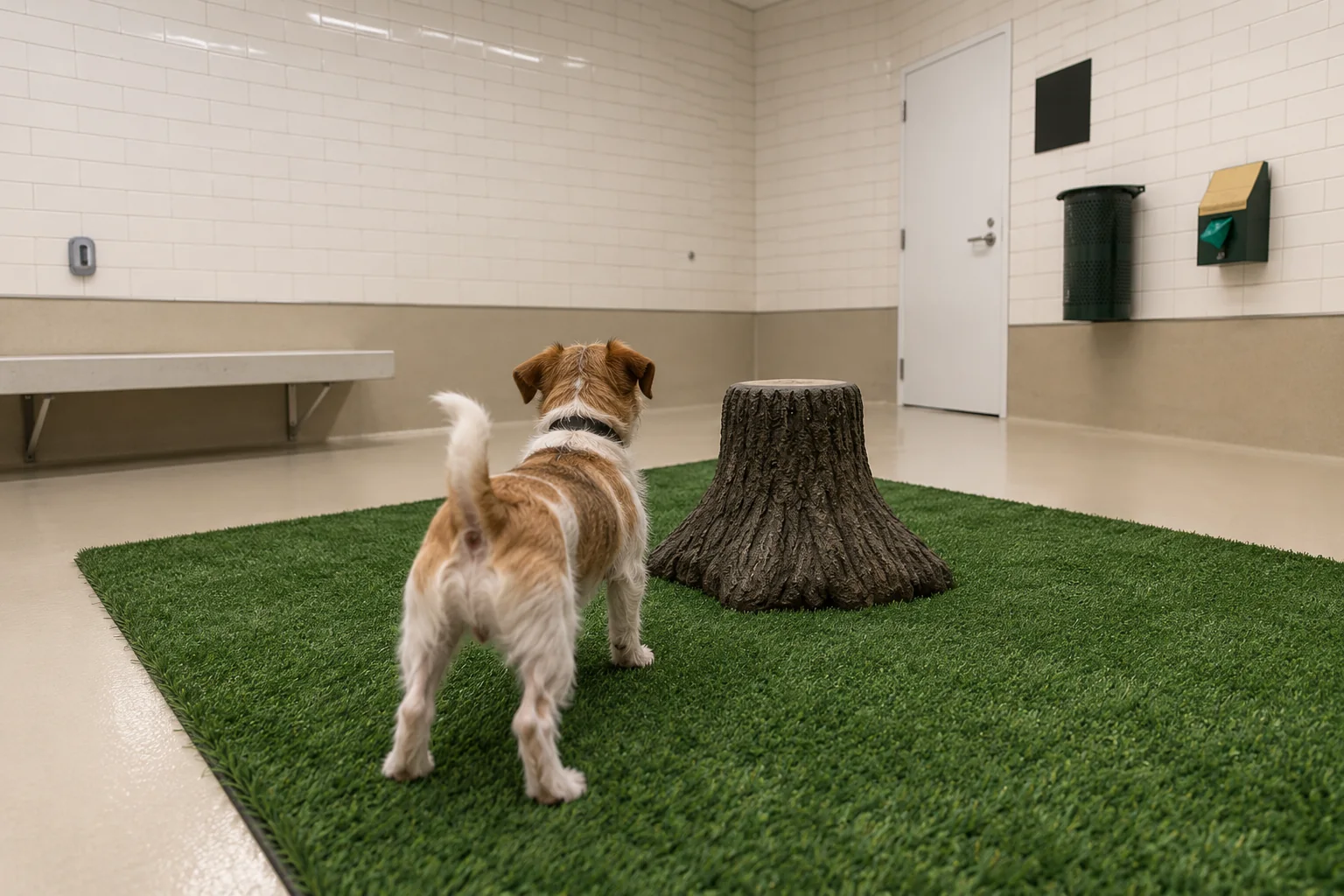
Your pet needs its own reservation with the airline before you travel to SEA. At the checkpoint, your pet stays out of the X-ray machine. The carrier goes through it empty.
If you’re already on your way, check the booking for a pet reservation and call the airline if you can’t find one.
Before you leave for SEA, settle the airline question
Tell the airline your pet’s species and size, plus the carrier’s dimensions. Give it your destination and every carrier on the itinerary. Ask whether the animal can travel in the cabin, must travel in the baggage compartment, or needs a cargo booking. A passenger ticket alone doesn’t reserve a place for a pet.
Alaska Airlines and Hawaiian Airlines publish the following rules for their own flights. They don’t set the rules for another airline on your ticket.
| Your pet’s booking | What Alaska and Hawaiian say |
|---|---|
| In the cabin | Reserve space before travel. Places are limited. The fee is $100 each way per carrier, or $35 on flights wholly within the State of Hawaii. The pet must fit in a soft-sided carrier no larger than 17 × 11 × 9.5 inches. Hard-sided kennels are not allowed. A cabin pet counts toward your carry-on allowance except on flights within the State of Hawaii. Dogs, cats and rabbits must be at least eight weeks old and fully weaned. Small household birds are also accepted. To Hawaii, only dogs, cats and rabbits can travel in the cabin, and rabbits only to Honolulu. The passenger must be 18 or older, or travel with someone who is. You can’t sit in an emergency exit row or a bulkhead row with a pet. |
| In the baggage compartment | Reserve space in advance. The usual fee is $200 each way per kennel. It is $100 for pets traveling wholly within Alaska, and $60 wholly within Hawaii. The pet and kennel together can weigh up to 150 pounds. A licensed veterinarian’s health certificate is required. Check in no more than two hours before departure, but finish acceptance at least 90 minutes before departure. |
For a pet in the baggage compartment, the kennel must be hard-sided and large enough for the animal to stand without its ears touching the top, turn around and lie down. Soft-sided, collapsible, mesh, wire and snap-top carriers are refused, and so are carriers with a plastic door or a lock. Alaska lists these acceptable sizes:
| Kennel size | Length × width × height |
|---|---|
| Extra small | 21 × 16 × 15 inches |
| Small | 27 × 20 × 19 inches |
| Medium | 32 × 22 × 23 inches |
| Large | 36 × 24 × 26 inches |
| Extra large | 40 × 27 × 30 inches |
Alaska and Hawaiian don’t accept short-nosed dogs and cats in the baggage compartment, except on flights within Hawaii or between Hawaii and the U.S. mainland. The excluded dogs, and their mixes, are American Pit Bull, American Staffordshire Terrier, Boston Terrier, Boxer, Brussels Griffon, all Mastiffs, Bulldog, Bull Terrier, Chow Chow, Dutch Pug, English Bulldog, English Toy Spaniel, French Bulldog, Japanese Mastiff, Japanese Pug, Japanese Spaniel, Pekingese, Pug, Shih Tzu and Staffordshire Bull Terrier. The excluded cats are Burmese, Exotic Shorthair, Himalayan and Persian. Short-nosed pets can still fly in the cabin if the carrier fits under the seat.
Neither airline accepts pets, in the cabin or the baggage compartment, to Europe, London, Japan, Seoul, Belize City, Guatemala City, Pago Pago, Papeete, Rarotonga or Sydney. Alaska’s baggage page lists exceptions for active-duty military on orders. Alaska and Hawaiian say they won’t transfer a pet in the baggage compartment to another airline. You must claim and recheck the animal with that carrier, so confirm the connection before booking.
On Alaska and Hawaiian, a pet does not ride in a seat
On Alaska and Hawaiian, a pet stays in its carrier, head and tail included, in the boarding area, the walkways, the lounges and on board. It sits under the seat during taxi, takeoff and landing. A second ticket for an adjacent seat buys room for two carriers, not a seat for the pet.
For Alaska, check in before security on the Main Terminal ticketing level (Level 5), near Door 29. Self check-in kiosks, bag tag stations and bag drops are also on Level 4 by Skybridges 5 and 6. Alaska flies from Concourses C, D and N. Hawaiian also checks in on Level 5 before security and flies from S Concourse. The Alaska and Hawaiian Guest Services point is on that level.
Flying with another airline? Start with our airline directory to find your carrier, then confirm its pet policy directly. Alaska and Hawaiian carry trained service animals free.
If you’re flying internationally, the airline’s approval is only one part of the trip. The Port of Seattle directs you to the destination country’s embassy or consulate to determine its pet travel regulations, and to your veterinarian, the CDC and USDA APHIS for entry, return and export requirements.
Give your pet a break before the checkpoint
The Port lists these outdoor relief areas:
- North, departures: outside Door 33 by Alaska Airlines on the ticketing level.
- North, arrivals: outside Door 26 by Alaska Airlines on the baggage claim level.
- South, arrivals: near Doors 00 and 02, past Carousel 1.
- Parking garage: outside on Level 1 near the blue elevators and cruise lobby exit.
SEA doesn’t publish hours for these areas in its directory.
Need a kennel before check-in? Smarte Carte Baggage Storage sells pet kennels on the Main Terminal baggage claim level, before security, between Carousels 9 and 10. It’s open daily from 7 a.m. to 10 p.m., except for closures from 11:30 a.m. to noon and 6 to 6:30 p.m.
The Port says pets must be in their travel carriers and leashed in the terminal. It makes an exception for training and service dogs and other specially trained pets assisting travelers with disabilities.
Security with a pet at SEA
Take your pet out of the carrier, send the empty carrier through the X-ray, and lead the animal through screening with you. The Port also says you can ask for a separate screening if taking your pet out in the lane won’t work.
If TSA’s working dogs are at your checkpoint, airport staff may send you to another one. For a very early or late departure, Checkpoint 4 by the Central Terminal and B and C gates is open 24 hours. You can reach any gate from there. The others list these hours, and our security page has the checkpoint map:
| Checkpoint | Listed hours |
|---|---|
| 1 and 5 | 4 a.m.–8 p.m. |
| 2 | 4 a.m.–4 p.m. |
| 3 | 4 a.m.–11:30 p.m. |
| 6 | 4 a.m.–10 p.m. |
After security, find the relief area that fits your gate
The Port lists relief areas near A10, the restrooms by C3, and the restrooms by D1. For N and S, head to the relief area at that concourse’s SEA Underground train station. See our pet relief listing and Main Terminal guide. A, B, C and D connect on foot after security. N and S require the airside train.
If you’re departing from B, choose one of the listed relief areas before you settle at your gate. The Port also lists a relief area on the International Arrivals Facility mezzanine, inside the customs area. It is for arriving international passengers, so don’t plan to use it before a departure.
Sources
- Our pet relief listing, luggage storage page and security page
- Our airline directory, Alaska check-in guide and Main Terminal guide
- Port of Seattle’s pet travel article
- Alaska Airlines’ pet travel page, cabin pet rules and baggage compartment pet rules